What is Meditation? We are regularly being encouraged to meditate but rarely given guidance on how to do it. Here is a good way to start.
The gratitude meditation is one of the most basic and oldest meditations of Buddhism, and it is also known and practiced in shamanism.
Basically it is quite simple: it is about feeling gratitude for what you have and for what is good in your own life and in the points of contact with all life in general.
Many a person will say, “Yes, yes”, “that’s great, I’m happy with the car and the weather is nice too, but…” and then a whole bunch of all the things you want and those you want to have differently and all the things that really get you upset.
Well, it’s not like that.
In essence, it is about becoming aware or being aware again and again of the positive values you have in your immediate life.
These can be material values, starting with the very simple ones that have become absolutely natural to us: a pencil, a cup, the coffee machine, the house key, a tap from which hot and cold water always flows reliably, right up to the material things that are generally understood as “something bigger” – the car, perhaps a good bank balance, a holiday trip, a new floor in the living room. But even more basic are things like “enough to eat” and “a roof over one’s head” – things that are not taken for granted and given for a unfortunately still very large part of the population of this planet. There are a considerable number of people who, when they get up in the morning, have no idea where they will lie down at night to sleep, let alone what they will cover themselves up with. So what has become quite normal in our latitudes is definitely something “very good” in our lives.
But in the same way, there are many intangible values that we “have” in our lives. People we like, good relationships, friends, no quarrelling with the neighbor, living in a country where there is peace, so no bombs on the head, no shooting, no immediate danger of death. Health, the fact that we can see, a smile from someone, an encouraging word or a text message that comes just in time – all things that are “good”. Inner peace, having accomplished something, a moment of happiness, a real encounter with another person, or sometimes with an animal, a moment of silence and contentment – all that is also “good”.
We tend to take this good for granted. Sometimes we notice it, sometimes it gets lost in everyday life. We tend to focus our thoughts and attention on what needs change or improvement, all the “yes, that’s fine, but…” in our lives.
It is not about an inventory, not about a list of values to be made, nor is it about an insurance sum or counting wealth like Dagobert Duck (with whom, as we all know, it never helped) – it is about feeling, becoming aware, becoming newly aware, or keeping within oneself the awareness of how much is good in one’s own life. And it is about showing appreciation for everything. It is about not letting these things fade away or forget them as a matter of course and habit, but to show appreciation for them again and again, every day anew. Friendship, good relationships never really become a matter of course but are a gift every day. Material things that we possess may become commonplace over time, but they are there every day, fulfilling their service and making our lives easier or more pleasant. Good circumstances, peace, food, air to breathe – they are there every day, enabling us to live, every single day.
If you can comprehend, feel, sense these things, even if you think “yes is actually true” while reading now – then you have just done a gratitude meditation.
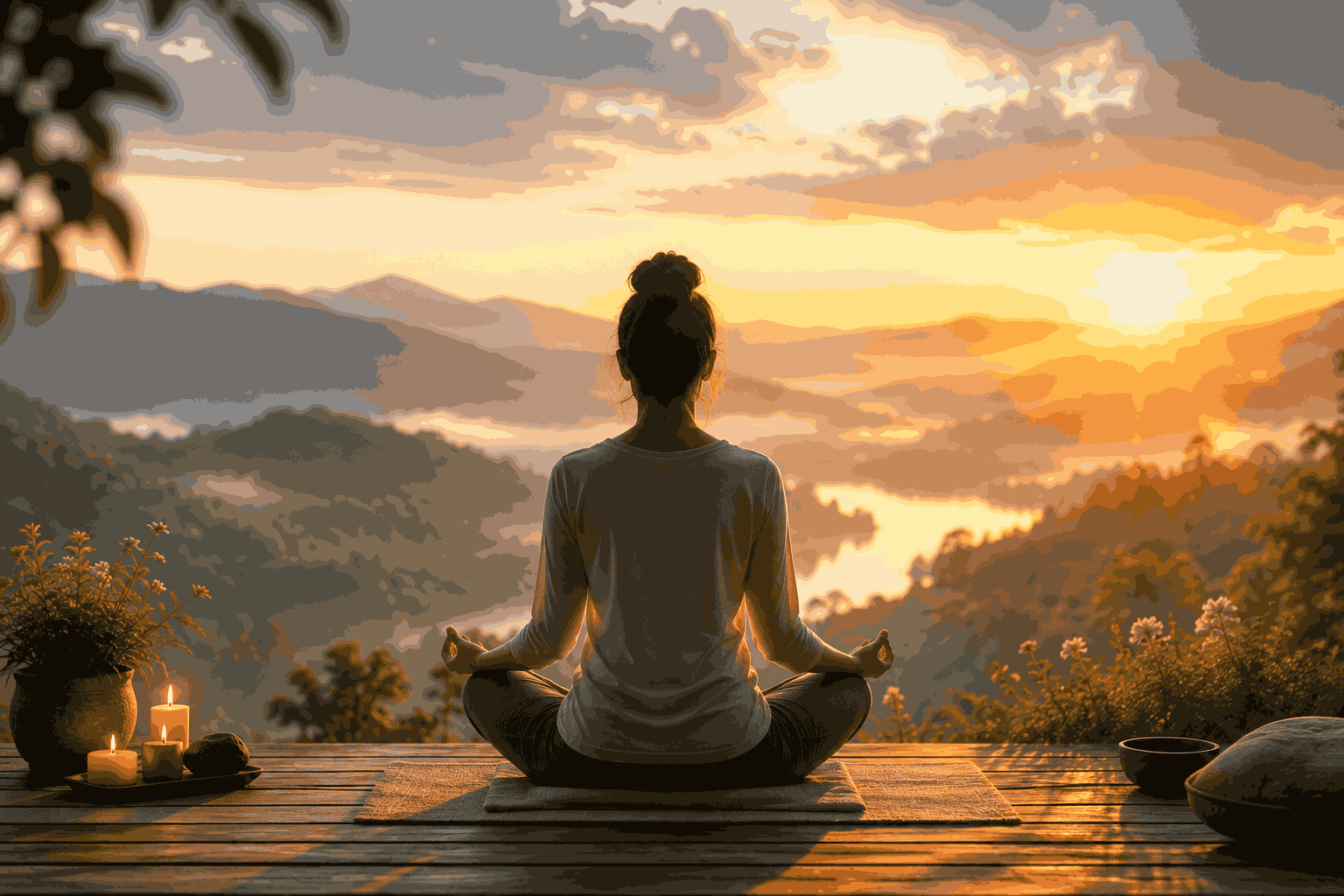
It’s quite simple. You don’t have to sit on a pillow, stand on your head or do anything special – but you can if you want to.
At the beginning, or when it is particularly difficult, it is good to take a few minutes of time and rest – no matter where and how.
One concentrates on oneself or collects oneself. If this is difficult, if thoughts are racing or emotions are shaking, it helps to take a few deep breaths and feel the breath going in – out – in – in – out, deep into the body and then out again.
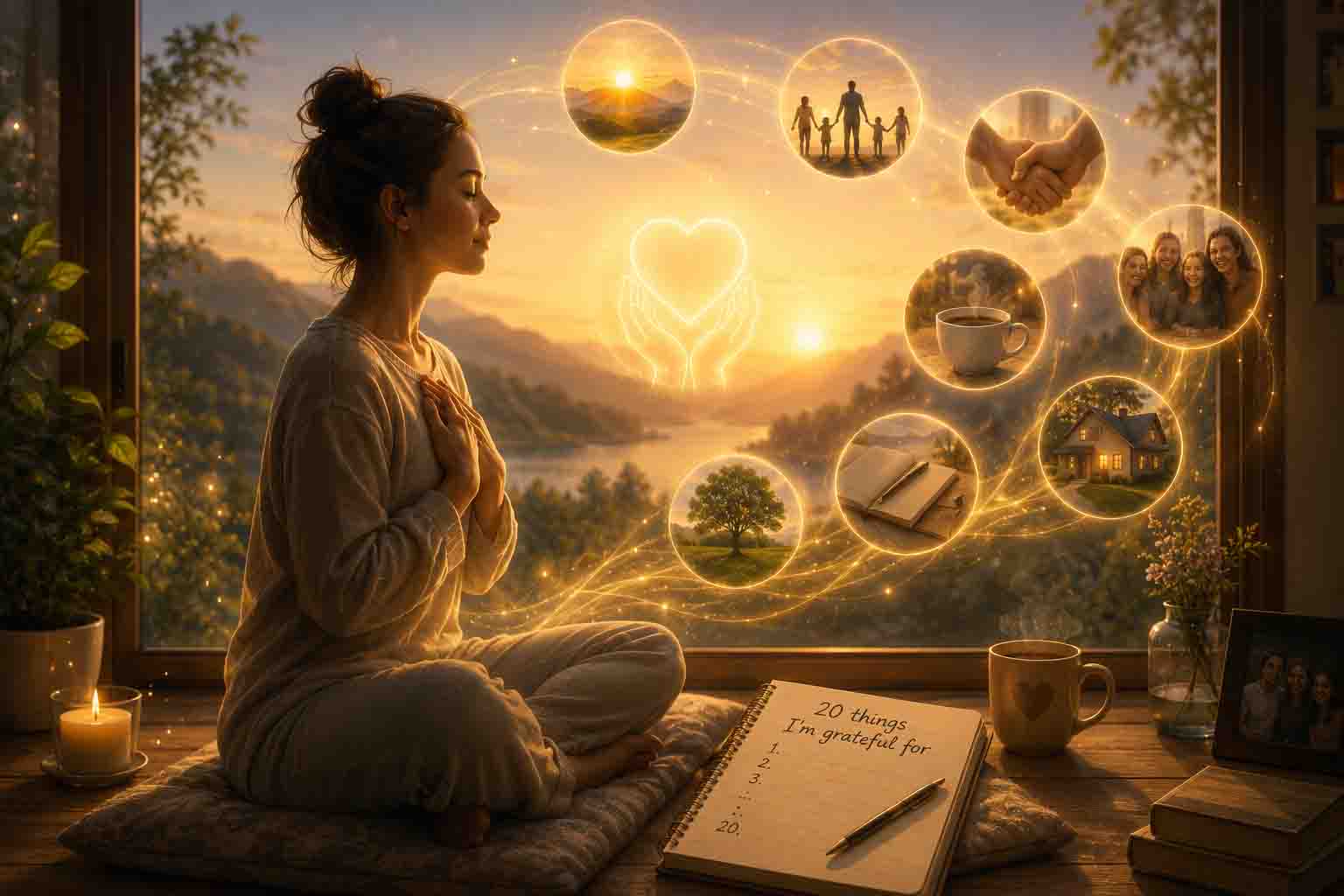
And then you start to think of something you have, something material or something immaterial, something that is good. Something big or something small – it doesn’t matter. You look at it, think about it for a moment, see what it does for you, how it contributes to your life, and realize that it has value. You can imagine for a moment what it would be like without it: no coffee cup, no bed, no intact family, no friends, no sunshine – the contrast quickly makes you realize how good it is to have all that.
You do this with some things – big, small, concrete, just emotional – it doesn’t matter, just things that represent a value to you or where you suddenly perceive or re-perceive a value in it.
And suddenly you notice that you become calmer, maybe you start to feel rich, you think that you have a lot, maybe you smile, just a little or a lot, you start to feel joy inside you, and often you also get the feeling that you could thank your toothbrush or tell a friend again that you really like him.
When such signs appear, then it is good, then one can stop meditation. And take the mood you just had into your life. And if for some reason it fades away, then you can become aware again of all the values there are and appreciate them again.
When things are really bad, it helps if you don’t just look at things mentally, but write them down on a piece of paper. 20 things I’m grateful for. At number 15, the world is usually a little better.
It is worth doing this meditation in the morning. The mood then shapes the day. With time, one becomes so practiced in concentrating one’s thoughts and really feeling the appreciation from within that one can combine it well with brushing one’s teeth or showering or whatever. If you’re not so practiced, you might need to take a few extra minutes.
It’s simple, maybe it seems too simple. But there is more power in this simplicity than one might think at first glance – power that has inspired people again and again for centuries, even thousands of years.